Why the Basilica of Guadalupe
Matters Today
Few places in Mexico carry the emotional, historical, and cultural weight of the Basílica de Guadalupe.
Every year, millions visit this sacred complex in northern Mexico City. Some arrive as devoted pilgrims. Others come as curious travelers. Many are unsure what to expect.
- • Is it purely religious?
- • Is it historical?
- • Is it worth visiting if you are not Catholic?
To understand why the Basilica matters is to understand a defining layer of Mexican identity.
More Than a Church: A National Symbol
The Basilica is not simply a religious building.
It represents:
Faith and Devotion
A spiritual center for millions of believers
Indigenous and Colonial History
Where two worlds converged in 1531
Cultural Continuity
Living traditions across centuries
National Identity
A unifying symbol for Mexico
Social Resilience
A site of hope and perseverance through Mexico's modern history
The story begins in 1531, when, according to tradition, the Virgin Mary appeared to Juan Diego on Tepeyac Hill. The image associated with that event would become one of the most powerful religious symbols in the Americas.
But even beyond belief, the Basilica stands at the intersection of history, politics, art, and culture.
It is a living monument.
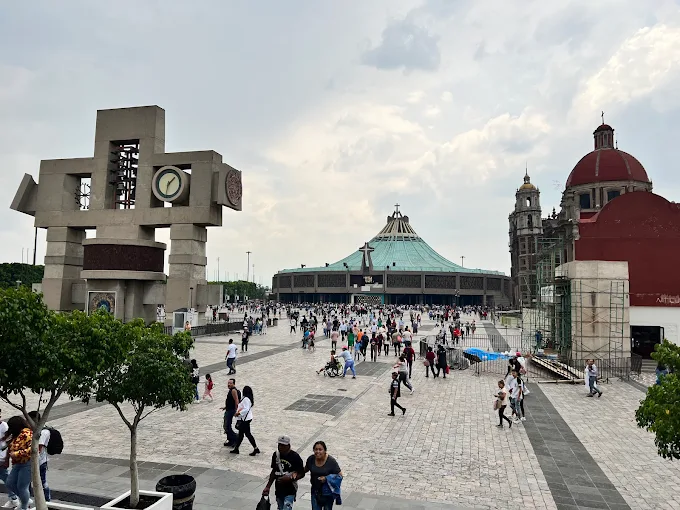
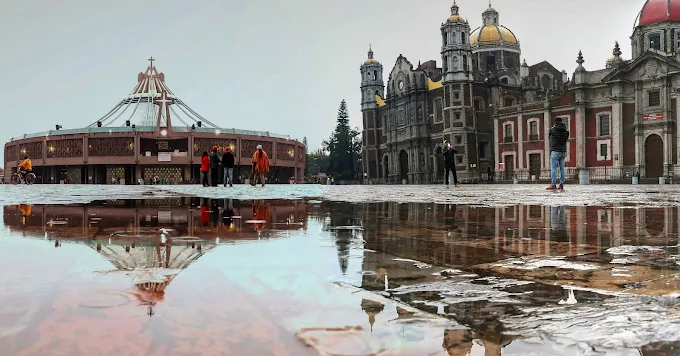
The Old and the New Basilica
When visitors arrive, they often notice two main structures:
The Old Basilica (17th century)
Which began to sink due to unstable ground
The Modern Circular Basilica
Completed in 1976, designed to accommodate massive pilgrimages
The architectural contrast itself tells a story.
Mexico is a country layered with eras — pre-Hispanic, colonial, modern — and the Basilica complex reflects that evolution physically.
Walking through the plaza, you move across centuries within minutes.
Why It Matters Beyond Religion
Even for non-religious visitors, the Basilica offers insight into:
How belief shapes national identity
How symbols unify diverse populations
How colonial and Indigenous histories intertwined
How pilgrimage continues to shape public space
The Virgin of Guadalupe became more than a spiritual figure. She became a cultural emblem — appearing in political movements, art, murals, and social discourse throughout Mexico's history.
Understanding that symbolism changes how you see the entire country.
What Most Visitors Miss
Many travelers visit briefly:
- They see the image.
- They take photos.
- They leave.
But without context, much of the meaning is lost.
Few visitors understand:
Why Tepeyac Hill was already sacred before 1531
How Guadalupe became linked to Mexican independence
Why the image carries Indigenous symbolism
How pilgrimage affects the city each December
Without historical framing, the Basilica becomes a stop.
With context, it becomes a key.
Is It Worth Visiting If You're Not Religious?
Yes — if you approach it as a cultural site, not only a devotional one.
The Basilica offers:
Architectural Contrasts
From colonial baroque to modern brutalism
Deep Historical Narratives
Spanning Indigenous, colonial, and modern eras
Cultural Symbolism
Understanding Mexico's most powerful icon
Insight into Modern Mexican Society
How tradition shapes contemporary life
You do not need to share the faith to appreciate the impact.
But you do need context to understand it fully.
Experiencing the Basilica With Historical Insight
Visiting independently is possible and common.
However, many travelers find that without guidance:
The symbolism remains abstract
The history feels fragmented
The experience lacks depth
Exploring the Basilica with structured historical interpretation transforms the visit into something more layered and meaningful.
Understanding why this site continues to draw millions each year — and how it shapes Mexican identity — adds a dimension that casual visits often miss.
If you would like to experience the Basilica of Guadalupe with historical and cultural context, you can learn more about our guided experience here.
Discover the Basilica Guided ExperienceDiscover the Basilica Through the Lens
Explore the architectural beauty, spiritual atmosphere, and cultural significance of Mexico's most sacred site.
The Sacred Complex
Where faith and history converge

Modern Architecture
The circular basilica designed for millions

Colonial Legacy
The historic Old Basilica

Pilgrimage Tradition
Millions visit each year

Sacred Tepeyac
The hill where it all began

The Plaza
Gathering space for the faithful
Frequently Asked Questions
Where is the Basilica of Guadalupe located?
The Basilica complex is located in northern Mexico City, in the Tepeyac area.
How long does a visit take?
A meaningful visit typically takes 1.5 to 2 hours, depending on how deeply you explore the site.
Is there a dress code?
There is no strict dress code for tourists, but respectful attire is recommended, as it remains an active religious site.
When is the busiest time to visit?
December 12th, the Feast Day of Our Lady of Guadalupe, draws millions of pilgrims.
Can non-Catholics visit?
Absolutely. Visitors of all backgrounds are welcome.
Final Thoughts
The Basílica de Guadalupe is not only a destination.
It is a lens.
Through it, you see how faith, identity, and history intersect in Mexico.
Whether you arrive as a believer, a skeptic, or a student of culture, the Basilica offers something rare: a living narrative that continues to shape an entire nation.
Understanding it adds depth to your experience of Mexico City.
Ready to Experience the Basilica?
Join our guided Basilica tour — led by expert guides who bring historical depth and cultural understanding to one of Mexico's most important sites.
Book the Basilica Tour